
458.5K
Downloads
279
Episodes
Talks and interviews from Hoover Institution events.
Episodes
Apr 2, 2021
Apr 2, 2021
17 min
Robert B. Zoellick is Senior Counselor at Brunswick Geopolitical, an advisory service of Brunswick Group, and a Senior Fellow at Harvard’s Belfer Center. In addition, Zoellick serves on the boards of Temasek and Twitter, chairs the International Advisory Council of Standard Chartered Bank, and is on the Advisory Board of Swiss Re. Zoellick was the President of the World Bank Group from 2007-12, U.S. Trade Representative from 2001 to 2005, and Deputy Secretary of State from 2005 to 2006. From 1985 to 1993, Zoellick served as Counselor to the Secretary of the Treasury and Under Secretary of State, as well as White House Deputy Chief of Staff.
ABOUT THE PROGRAM
This talk is part of the History Working Group Seminar Series. A central piece of the History Working Group is the seminar series, which is hosted in partnership with the Hoover Library & Archives. The seminar series was launched in the fall of 2019, and thus far has included six talks from Hoover research fellows, visiting scholars, and Stanford faculty. The seminars provide outside experts with an opportunity to present their research and receive feedback on their work. While the lunch seminars have grown in reputation, they have been purposefully kept small in order to ensure that the discussion retains a good seminar atmosphere.
Mar 31, 2021
Mar 31, 2021
36 min
Wednesday, March 31, 2021
Hoover Institution, Stanford University
Senator Mike Lee in conversation with Michael McConnell on Wednesday, March 31, 2021 at 3:00 PM ET.
ABOUT THE SPEAKERS
Senator Mike Lee was elected in 2010 as Utah's 16th Senator. He has spent his career defending the basic liberties of all Americans and advocating for our founding constitutional principles.
Senator Lee acquired a deep respect for the Constitution early in life while watching his father, Rex Lee, serve as the Solicitor General under President Ronald Reagan. He attended most of his father's arguments before the U.S. Supreme Court, giving him a unique understanding of government up close.
Lee graduated from Brigham Young University Law School in 1997 and went on to serve as law clerk to Judge Dee Benson of the U.S. District Court for the District of Utah, and then with future Supreme Court Justice Judge Samuel A. Alito, Jr. on the U.S. Court of Appeals for the Third Circuit.
Michael McConnell is a Senior Fellow at the Hoover Institution and the Richard and Frances Mallery Professor of Law and the director of the Constitutional Law Center at Stanford Law School.
During his many years of government service, McConnell served as a circuit judge on the US Court of Appeals for the Tenth Circuit and as an assistant to Solicitor General Rex Lee at the Department of Justice.
Over his career he has argued fifteen cases in the U.S Supreme Court. His teaching focuses on constitutional law, constitutional history, the First Amendment, and interpretive theory. His most recent book is The President Who Would Not Be King: Executive Power under the Constitution published in November 2020; his next book will be released in 2021 the Establishment of Religion: Neutrality, Accommodation, and Separation.
For more information go to: https://www.hoover.org/publications/capital-conversations
Mar 26, 2021
Mar 26, 2021
59 min
Friday, March 26, 2021
The Hoover Institution hosts A Decade Of US Cyber Strategy: A Hoover Chat Series With Cyber Experts And Defense Leaders on January 29, February 12, February 26, March 12, March 19, and March 26, 2020.
The March 26 session focuses on how deterrence and escalation factor into US cyber strategy and have shaped the evolution of US cyber strategy with a concluding look to the future and cyber strategy under the Biden Administration.
This series of discussions will look at the evolution of US cyber strategy over the last decade. Join scholars and defense cyber leaders as they discuss chapters from the recently published book, Ten Years In: Implementing Strategic Approaches to Cyberspace, all with an eye towards the future of US cyber strategy.
The series features authors from the volume, including both academics and Department of Defense cyber leaders, as well as Hoover experts that discuss the history of cyber strategy, cyber warfare, cyberspace talent, and public-private innovation in cyberspace and will be moderated by Dr. Jackie Schneider, Hoover Fellow, Hoover Institution.
For more information visit https://www.hoover.org/events/ten-years-us-cyber-strategy-chat-series
Mar 25, 2021
Mar 24, 2021
Mar 24, 2021
14 min
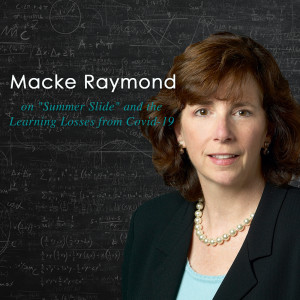
2. (2:44) Do you have a best guess as to how much learning loss will have occurred by next fall for the average student? What will the distribution of learning loss look like?
3. (4:36) What would new approaches to classroom-based instruction look like? Who is preventing new approaches from being adopted?
4. (7:02) Estimates of learning loss come from standardized tests, but many people are skeptical of their ability to accurately measure learning gains. Are there other kinds of assessments that are helpful?
5. (10:33) How long do you think it will take to get education and academic achievement back on track once schools safely re-open?
6. (12:14) The news is full of stories of districts that are facing challenges getting schools up and running. What are the options for families in those situations?
Mar 20, 2021
Mar 20, 2021
1 hr 2 min
Friday, March 19, 2021
The Hoover Institution hosts A Decade Of US Cyber Strategy: A Hoover Chat Series With Cyber Experts And Defense Leaders on January 29, February 12, February 26, March 12, and March 19, 2020.
The March 19 session focuses on the role of public-private partnerships and innovation in defense cyber strategy.
This series of discussions will look at the evolution of US cyber strategy over the last decade. Join scholars and defense cyber leaders as they discuss chapters from the recently published book, Ten Years In: Implementing Strategic Approaches to Cyberspace, all with an eye towards the future of US cyber strategy.
The series features authors from the volume, including both academics and Department of Defense cyber leaders, as well as Hoover experts that discuss the history of cyber strategy, cyber warfare, cyberspace talent, and public-private innovation in cyberspace and will be moderated by Dr. Jackie Schneider, Hoover Fellow, Hoover Institution.
For more information visit https://www.hoover.org/events/ten-years-us-cyber-strategy-chat-series
Mar 20, 2021
Mar 20, 2021
1 hr 15 min
Thursday, March 18, 2021
The Hoover Institution hosts Defending Media Freedom in Taiwan on Thursday, March 18, 2021 from 4:30 p.m. - 5:45 p.m. PDT.
In December 2020, Taiwan’s National Communications Commission voted to deny a broadcast license to CTiTV, a pro-China news channel that had been highly critical of the Taiwanese government and ruling party, the DPP. This decision marks the first time a TV channel has been forced off the air for violation of the terms of its license since Taiwan became a democracy. CTiTV is part of the Want Want China Times group, a media conglomerate owned and run by the pro-unification snack foods magnate Tsai Eng-meng, and it has been accused of coordinating its reporting with the Taiwan Affairs Office in Beijing. However, until being forced off the air, it was also a popular source of news among supporters of the opposition KMT and an important voice in Taiwan’s diverse and critical TV landscape.
In this moderated discussion, three panelists from Taiwan consider the complex issues this decision raises and debate when -- and if -- it is ever appropriate for government to regulate media content and limit access to the broadcast spectrum in a liberal democracy.
Click the following link for more information about the Hoover Project on Taiwan in the Indo-Pacific Region
https://www.hoover.org/research-teams/hoover-institution-project-taiwan-indo-pacific-region
Mar 16, 2021
Mar 12, 2021
Mar 12, 2021
1 hr 2 min
The Hoover Institution hosts A Decade Of US Cyber Strategy: A Hoover Chat Series With Cyber Experts And Defense Leaders on January 29, February 12, February 26, March 12, and March 19, 2020.
The March 12 session focuses on how cyber strategy can be used to recruit, retain, and best employ cybersecurity talent for the Department of Defense.
PANELISTS
Dr. Jacquelyn Schneider | Hoover Fellow, Hoover Institution, Stanford University
Raj Shah | Shield Capital; Visiting Fellow, Hoover Institution, Stanford University
Dr. Chaitra Hardison | RAND Behavioral Scientist
Tim Booher | HSBC Bank’s Global Chief Technology Officer for Cybersecurity For more information visit
https://www.hoover.org/events/ten-years-us-cyber-strategy-chat-series
Mar 10, 2021