
458.6K
Downloads
279
Episodes
Talks and interviews from Hoover Institution events.
Episodes
Mar 26, 2021
Mar 26, 2021
59 min
Friday, March 26, 2021
The Hoover Institution hosts A Decade Of US Cyber Strategy: A Hoover Chat Series With Cyber Experts And Defense Leaders on January 29, February 12, February 26, March 12, March 19, and March 26, 2020.
The March 26 session focuses on how deterrence and escalation factor into US cyber strategy and have shaped the evolution of US cyber strategy with a concluding look to the future and cyber strategy under the Biden Administration.
This series of discussions will look at the evolution of US cyber strategy over the last decade. Join scholars and defense cyber leaders as they discuss chapters from the recently published book, Ten Years In: Implementing Strategic Approaches to Cyberspace, all with an eye towards the future of US cyber strategy.
The series features authors from the volume, including both academics and Department of Defense cyber leaders, as well as Hoover experts that discuss the history of cyber strategy, cyber warfare, cyberspace talent, and public-private innovation in cyberspace and will be moderated by Dr. Jackie Schneider, Hoover Fellow, Hoover Institution.
For more information visit https://www.hoover.org/events/ten-years-us-cyber-strategy-chat-series
Mar 25, 2021
Mar 24, 2021
Mar 24, 2021
14 min
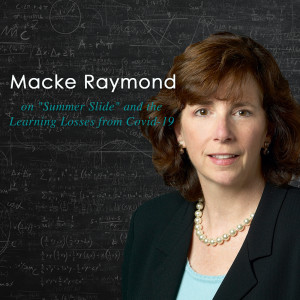
2. (2:44) Do you have a best guess as to how much learning loss will have occurred by next fall for the average student? What will the distribution of learning loss look like?
3. (4:36) What would new approaches to classroom-based instruction look like? Who is preventing new approaches from being adopted?
4. (7:02) Estimates of learning loss come from standardized tests, but many people are skeptical of their ability to accurately measure learning gains. Are there other kinds of assessments that are helpful?
5. (10:33) How long do you think it will take to get education and academic achievement back on track once schools safely re-open?
6. (12:14) The news is full of stories of districts that are facing challenges getting schools up and running. What are the options for families in those situations?
Mar 20, 2021
Mar 20, 2021
1 hr 2 min
Friday, March 19, 2021
The Hoover Institution hosts A Decade Of US Cyber Strategy: A Hoover Chat Series With Cyber Experts And Defense Leaders on January 29, February 12, February 26, March 12, and March 19, 2020.
The March 19 session focuses on the role of public-private partnerships and innovation in defense cyber strategy.
This series of discussions will look at the evolution of US cyber strategy over the last decade. Join scholars and defense cyber leaders as they discuss chapters from the recently published book, Ten Years In: Implementing Strategic Approaches to Cyberspace, all with an eye towards the future of US cyber strategy.
The series features authors from the volume, including both academics and Department of Defense cyber leaders, as well as Hoover experts that discuss the history of cyber strategy, cyber warfare, cyberspace talent, and public-private innovation in cyberspace and will be moderated by Dr. Jackie Schneider, Hoover Fellow, Hoover Institution.
For more information visit https://www.hoover.org/events/ten-years-us-cyber-strategy-chat-series
Mar 20, 2021
Mar 20, 2021
1 hr 15 min
Thursday, March 18, 2021
The Hoover Institution hosts Defending Media Freedom in Taiwan on Thursday, March 18, 2021 from 4:30 p.m. - 5:45 p.m. PDT.
In December 2020, Taiwan’s National Communications Commission voted to deny a broadcast license to CTiTV, a pro-China news channel that had been highly critical of the Taiwanese government and ruling party, the DPP. This decision marks the first time a TV channel has been forced off the air for violation of the terms of its license since Taiwan became a democracy. CTiTV is part of the Want Want China Times group, a media conglomerate owned and run by the pro-unification snack foods magnate Tsai Eng-meng, and it has been accused of coordinating its reporting with the Taiwan Affairs Office in Beijing. However, until being forced off the air, it was also a popular source of news among supporters of the opposition KMT and an important voice in Taiwan’s diverse and critical TV landscape.
In this moderated discussion, three panelists from Taiwan consider the complex issues this decision raises and debate when -- and if -- it is ever appropriate for government to regulate media content and limit access to the broadcast spectrum in a liberal democracy.
Click the following link for more information about the Hoover Project on Taiwan in the Indo-Pacific Region
https://www.hoover.org/research-teams/hoover-institution-project-taiwan-indo-pacific-region
Mar 16, 2021
Mar 12, 2021
Mar 12, 2021
1 hr 2 min
The Hoover Institution hosts A Decade Of US Cyber Strategy: A Hoover Chat Series With Cyber Experts And Defense Leaders on January 29, February 12, February 26, March 12, and March 19, 2020.
The March 12 session focuses on how cyber strategy can be used to recruit, retain, and best employ cybersecurity talent for the Department of Defense.
PANELISTS
Dr. Jacquelyn Schneider | Hoover Fellow, Hoover Institution, Stanford University
Raj Shah | Shield Capital; Visiting Fellow, Hoover Institution, Stanford University
Dr. Chaitra Hardison | RAND Behavioral Scientist
Tim Booher | HSBC Bank’s Global Chief Technology Officer for Cybersecurity For more information visit
https://www.hoover.org/events/ten-years-us-cyber-strategy-chat-series
Mar 10, 2021
Mar 9, 2021
Mar 9, 2021
1 hr 16 min
To celebrate International Women’s Day, the Director of the Hoover Institution and the 66th Secretary of State, Condoleezza Rice, hosted a conversation with four of our leading female national security and foreign policy scholars: Elizabeth Economy, Rose Gottemoeller, Ayaan Hirsi Ali, and Amy Zegart on March 8 from 2:15 - 3:30PM PT.
Each of these esteemed Hoover Fellows is releasing a book this year addressing the vital issues of our day. Through the lens of their own experiences, Secretary Rice and these scholars will discuss women's leadership, diversity, talent, and accomplishments in national security, as well as the challenges and rewards of working in this environment.
We honor the contributions of women at every level and in every facet of national security. Our Hoover Fellows’ commitment to continued research increasingly shapes the narratives, priorities, rules, and assessments of policy making.
ABOUT THE BOOKS
The World According to China, by Elizabeth Economy
The World According to China explores China's ambitions to transform the international system by reclaiming contested territories, reshaping the geostrategic landscape, and reforming the system of global governance to reflect Chinese norms and values. It argues that China's well-defined and highly-coordinated foreign policy playbook has contributed to significant progress in realizing the country's strategic objectives, while at the same time creating the conditions that are likely to undermine its future success.
Negotiating the New START Treaty, by Rose Gottemoeller
An invaluable insider’s account of the New START treaty negotiations between the US and Russian delegations in Geneva in 2009 and 2010. It examines the crucially important discussions about the treaty between President Barack Obama and President Dmitry Medvedev, and it describes the tough negotiations needed to gain the support of the Senate for the treaty. And importantly, at a time when the US Congress stands deeply divided, it tells the story of how, in a previous time of partisan division, Republicans and Democrats came together to ratify a treaty to safeguard the future of all Americans. >> Book Details
Prey: Immigration, Islam, and the Erosion of Women's Rights, by Ayaan Hirsi Ali
Deeply researched and featuring fresh and often shocking revelations, Prey uncovers a sexual assault and harassment crisis in Europe that is turning the clock on women’s rights much further back than the #MeToo movement is advancing it. No one in a position of power wants to admit that the eruption of sexual violence and harassment in Europe’s cities is linked to the arrival of several million migrants—most of them young men—from Muslim-majority countries. Pretending the problem doesn’t exist is the surest way to empower not only the far right but also the Islamists, whose solution entails even greater restrictions on female freedom. >> Book Details
Spies, Lies, and Algorithms: The History and Future of American Intelligence, by Amy Zegart
America’s spy agencies face a moment of reckoning. Although espionage has always been part of great power conflict, emerging technologies like AI, commercial satellites, and social media are empowering new enemies and opportunities, generating crushing volumes of data and tools to understand it, putting information at everyone’s fingertips, and creating powerful new decision-makers outside of governments. Spies, Lies, and Algorithms: The History and Future of American Intelligence is designed to be a fun read with a serious purpose: examining the history of the CIA and America’s 16 other intelligence agencies and assessing the challenges they confront in the digital age.
MODERATED BY
Condoleezza Rice is the Tad and Dianne Taube Director of the Hoover Institution and the Thomas and Barbara Stephenson Senior Fellow on Public Policy. In addition, she is a founding partner of Rice, Hadley, Gates & Manuel LLC, an international strategic consulting firm. Rice served as the sixty-sixth secretary of state of the United States (2005-2009) and as President George W. Bush’s national security adviser (2001 to 2005).
Mar 5, 2021
Mar 5, 2021
15 min
Leading up to and through World War II, the Japanese Empire curried favor with Muslims in China and in East Asia. Drawing on examples from Prof. Hammond’s recent book, China’s Muslims and Japan’s Empire: Centering Islam in World War II, the talk discusses Japanese policies and the ways in which the Japanese Government saw itself as the protector of Islam, while simultaneously advancing its imperial vision. For their part, Muslims from the colonial world found Japan’s anti-Western and anti-Soviet rhetoric appealing to a certain extent. By placing Muslims at the center of Japan’s imperial ambitions, it becomes clear that those ambitions extended beyond the boundaries of the Greater East Asia Co-Prosperity Sphere and into predominantly Islamic spaces like Central Asia, the Middle East, and North Africa.
Kelly Hammond is Assistant Professor of East Asian history at the University of Arkansas, an associate editor for the Journal of Asian Studies, and serves on the Public Intellectual Program for the National Committee on US-China Relations. Her recent work has been supported by the ACLS/Luce Foundation, the Chiang Ching-kuo Foundation, the American Philosophical Foundation, and the Kluge Center at the Library of Congress.
ABOUT THE PROGRAM
This talk is part of the History Working Group Seminar Series. A central piece of the History Working Group is the seminar series, which is hosted in partnership with the Hoover Library & Archives. The seminar series was launched in the fall of 2019, and thus far has included six talks from Hoover research fellows, visiting scholars, and Stanford faculty. The seminars provide outside experts with an opportunity to present their research and receive feedback on their work. While the lunch seminars have grown in reputation, they have been purposefully kept small in order to ensure that the discussion retains a good seminar atmosphere.